We Use CookiesWe use cookies to enhance the security, performance, functionality and for analytical and promotional activities. By continuing to browse this site you are agreeing to our privacy policy

10 Best Thermal Pads 2026 in the United States

How do we rank products for you?

Our technology thoroughly searches through the online shopping world, reviewing hundreds of sites. We then process and analyze this information, updating in real-time to bring you the latest top-rated products. This way, you always get the best and most current options available.

headphones-stars

Our Top Picks

#1

Winner

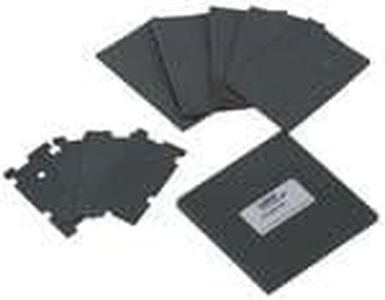
LAIRD A14568-01 - Thermal Interface Products, Tflex 5140 9x9" 2.8W/mK Gap Filler

The LAIRD A14568-01 Tflex 5140 thermal pad is a solid choice for those needing reliable heat transfer between components. With a thermal conductivity of 2.8 W/mK, it efficiently moves heat away from sensitive parts, helping to keep devices cooler. It stays stable across a wide temperature range from -50ºC to 200ºC, making it suitable for many electronics, including those exposed to varying conditions. The pad is naturally sticky, which makes it easy to position during assembly without extra adhesives. It's also electrically insulating, adding safety by preventing electrical shorts.

The low silicone extractables feature means it won’t leave harmful residues that could affect long-term performance. This thermal pad is well suited for electronics cooling applications where moderate thermal conductivity and chemical stability are key, but users with very specific thickness or mechanical flexibility needs might want to verify those details before deciding.

#2

Alphacool Apex Thermal Pad Soft 18W/mk 120x20x1mm (13486)

The Alphacool Apex Thermal Pad is designed to efficiently transfer heat away from electronic components, which is important to keep devices running smoothly and prevent overheating. Its thermal conductivity is quite high at 18 W/mK, meaning it can move heat effectively compared to many standard pads. The pad is 1mm thick, which is a common size suitable for filling gaps between components and heatsinks.

One of its standout features is its soft and flexible nature, thanks to low hardness and strong compressibility. This makes it easy to adapt to uneven surfaces, ensuring a good fit and improved contact, which is essential for optimal heat dissipation. The silicone-based material also offers natural stickiness, helping it stay in place without additional adhesives.

This pad is well suited for users who want a highly effective and versatile thermal interface that can adapt well to irregular surfaces, such as in custom PC builds or high-performance electronics. If you need a thermal pad that balances easy installation and strong heat transfer, this product is a solid choice, though those requiring very thick pads might need to look further.

#3

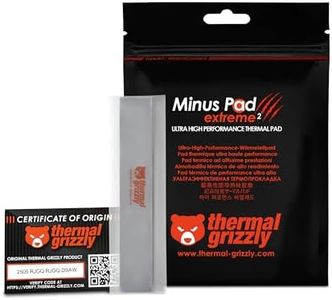
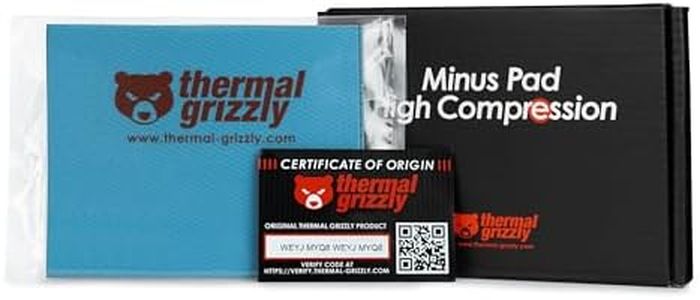
Thermal Grizzly Minus Pad Extreme 2 - High Performance Thermal Pad 120x20x1.0 mm (2 Pieces) - Superior Thermal Conductivity, Non-Hardening - Ideal for GPU, SSD, RAM, Game Consoles

Rating
7.9
Thermal Conductivity
Thickness
Hardness

Most important from
36 reviews

Thermal Conductivity
Transforms GPU cooling by drastically reducing temperatures under heavy load, turning extreme heat into manageable levels.
Thickness
Ideal thickness options make it perfect for laptop RAM and M.2 SSD modules, enhancing factory thermal solutions.
Hardness
Soft and flexible material simplifies installation while maintaining excellent contact without cracking or hardening over time.

The Thermal Grizzly Minus Pad Extreme 2 is a high-performance thermal pad designed to offer superior heat transfer, making it a strong choice for cooling GPUs, SSDs, RAM, and game consoles. Its standout feature is excellent thermal conductivity, which helps keep demanding hardware cooler and more stable. The pad comes in a 1.0 mm thickness, which is a common and versatile size suitable for many components.

A key benefit is its soft, non-hardening material that remains flexible over time, simplifying installation and maintaining good contact without becoming brittle or cracking. It is also electrically non-conductive, which adds safety by preventing short circuits on sensitive electronics.

This thermal pad is particularly recommended for users seeking a reliable upgrade to standard pads in high-performance or gaming setups. Users needing very thin or very thick pads, or exact compression specifications for unique hardware setups, should verify compatibility before purchase.

Rating
7.9
Thermal Conductivity
Thickness
Hardness

Most important from
36 reviews

Thermal Conductivity
Transforms GPU cooling by drastically reducing temperatures under heavy load, turning extreme heat into manageable levels.
Thickness
Ideal thickness options make it perfect for laptop RAM and M.2 SSD modules, enhancing factory thermal solutions.
Hardness
Soft and flexible material simplifies installation while maintaining excellent contact without cracking or hardening over time.

Buying Guide for the Best Thermal Pads

When it comes to picking the right thermal pad, it's important to understand that these components play a crucial role in maintaining the optimal temperature of your electronic devices. Thermal pads are used to fill gaps between heat-generating components and heat sinks, ensuring efficient heat transfer and preventing overheating. Choosing the right thermal pad involves considering several key specifications that will determine its effectiveness and suitability for your specific needs.
Thermal ConductivityThermal conductivity is a measure of how well the thermal pad can transfer heat. It is usually measured in watts per meter-kelvin (W/mK). Higher thermal conductivity means better heat transfer. For high-performance applications, such as gaming PCs or high-end electronics, you should look for thermal pads with higher thermal conductivity values, typically above 6 W/mK. For general use, such as in standard laptops or household electronics, a thermal pad with a lower thermal conductivity, around 3-5 W/mK, should suffice.
ThicknessThe thickness of a thermal pad is important because it needs to fill the gap between the heat source and the heat sink effectively. Thermal pads come in various thicknesses, usually ranging from 0.5mm to 5mm. Thicker pads can fill larger gaps but may have slightly lower thermal conductivity. If you have a small gap, a thinner pad (0.5mm to 1.5mm) is ideal as it will provide better thermal transfer. For larger gaps, thicker pads (2mm to 5mm) are necessary to ensure proper contact and heat dissipation.
HardnessHardness refers to the firmness of the thermal pad material. Softer pads can conform better to uneven surfaces, ensuring good contact and heat transfer. Harder pads are more durable and can withstand higher pressures. If your application involves components with uneven surfaces or requires a pad that can compress easily, opt for a softer pad. For applications where durability and resistance to pressure are more important, a harder pad is preferable.
Operating Temperature RangeThe operating temperature range indicates the temperatures within which the thermal pad can function effectively. This is crucial to ensure that the pad does not degrade or lose its thermal properties under high temperatures. For most consumer electronics, a thermal pad with an operating range of -40°C to 200°C is sufficient. For more demanding applications, such as industrial equipment or high-performance computing, you may need a pad with a wider or higher temperature range.
Compression RateThe compression rate of a thermal pad indicates how much it can be compressed under pressure. This is important for ensuring that the pad can fill gaps effectively and maintain good contact with the surfaces. A higher compression rate means the pad can compress more, which is useful for applications with varying gap sizes or uneven surfaces. For most standard applications, a moderate compression rate is adequate. For more specialized uses, such as in tightly packed electronics, a higher compression rate may be necessary.

FAQ